Mindset
Imagination in Golf: If You Can't See the Shot, You Can't Hit It
Feel is the part of the game nobody teaches anymore. But you've felt it: standing over a putt knowing it's in before you take the putter back. That feeling isn't luck. It can be earned back on purpose.
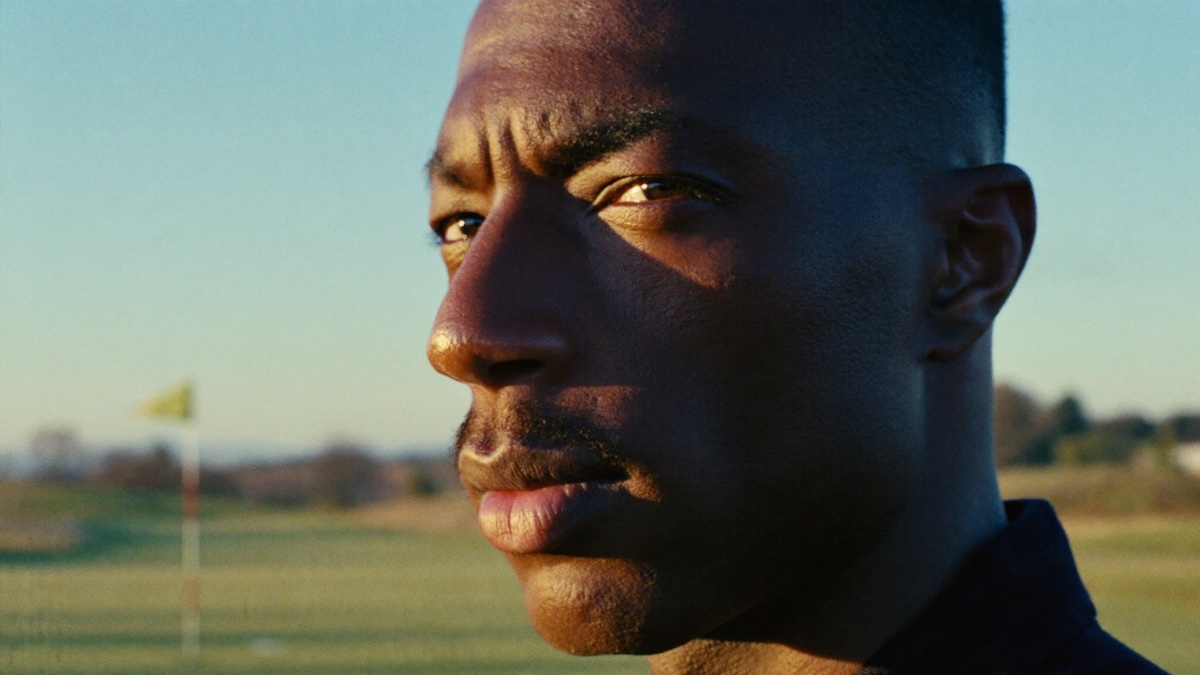
Before you ever make a swing, you hit the shot once in your head. Or you don't. And that's the difference nobody talks about anymore.
Here's the simplest truth I know about this game: if you can't see the shot, you can't aim it — and if you can't aim it, you can't hit it. Not consistently. Not when it matters. Alignment sticks tell your feet where to point. Only your imagination tells the ball where to go: the flight, the shape, the bounce, the roll. A target isn't a direction. It's a picture. And a golfer standing over the ball without a picture is just making a swing and hoping.
The part of the game that went missing
Golf instruction has never had more information in it, and somehow the game has never felt more mechanical. Launch monitors, force plates, 4K slow motion, face-to-path numbers to two decimal places. All of it is real and all of it is useful. But walk down any range and watch how people practice: heads full of positions, eyes on a screen, nobody looking at a target.
Part of the problem is who's doing the teaching. A lot of modern coaching comes from people who never teed it up in a tournament — who learned the game as theory, mechanics, and clubface instead of as an experience you feel under pressure. I want to be fair here: that knowledge is good. It has its place. But mechanics and clubface are maybe one to three parts of the nine pillars of a great round — the complete framework we reveal inside the app. Teach only that slice and you produce golfers who can recite their numbers and still can't tell you what shot they were trying to hit.
Feel is the massive missing piece. The old players had it because they had nothing else — they learned by watching ball flights, not data screens. They saw a shot, felt a swing, and matched the two. That skill didn't stop working. We just stopped teaching it.
You already know the feeling
You've had it. Every golfer has, and it's why we keep coming back.
You stand on a tee and you just know you're hitting the fairway — not hoping, knowing, the way you know your own name. You walk into a six-footer with 100 percent confidence and the putt is over before it starts. And every once in a while it happens from further out: the read comes in clean, the line lights up, and afterward you tell your buddies, honestly, "I knew I was going to make it" — from ten, twelve, fifteen feet.
Nobody forgets those moments. You can probably replay yours right now: the hole, the light, the exact roll of the ball. That's not a trick of memory. Those moments are the whole point — they're the prize. Not the score they produced. The feeling itself: certainty, in a game built on doubt.
So the real question of your golfing life isn't "how do I fix my slice." It's this: how do we repeat that beautiful feeling?
How you get it back on purpose
Here's the honest answer, and it's not a hack: that feeling is a bunch of small things done very well, stacked until certainty shows up on its own. Two of them carry most of the weight.
Imagination. See every shot before you hit it — every shot, even the boring ones. Behind the ball, build the full picture: the flight, the shape, where it lands, what it does after. On the greens, watch the ball roll into the hole in your mind before you step in. This is a skill, which means it sharpens with use and rusts without it. The first week it feels forced. Then one day the picture starts arriving before you ask for it — and that's the feeling, knocking.
Preparation. Imagination can't run on an empty tank. You can't vividly see a shot you've never practiced, and you can't stand over a six-footer with real certainty if you haven't rolled a hundred of them this month. The knowing is earned before the round: in how you practice, in knowing what your game actually does — how you drive it, where you score from, what your misses are. Certainty is just preparation you can feel. I've written about the pieces of this before: clear intentions give the work a direction, preparing the night before banks the confidence early, and deciding once and committing keeps the picture clean when you're over the ball. Imagination is what those three were always building toward.
Small things, done very well, over and over. That's the machinery behind every "I knew it was in." There's no shortcut to the feeling — but there's a path, and it's walkable.
Us vs. the course
This is why Elite Golf Consulting exists: to bring the full scope of the game back to life. Not just the mechanics — all of it. The feel, the imagination, the preparation, the scoring, the moments of knowing. The whole experience that made you fall in love with golf before anyone showed you a launch angle.
And we do it together. That's the part I care about most. You're not grinding alone against your own swing anymore — we're working on our game, side by side, and the opponent is the one it was always supposed to be. It's us vs. the course.
So here's your next round: stand behind every single ball and refuse to step in until you can see the shot. The full picture, start to finish. Some holes the picture will be fuzzy — that's information, that's the practice list writing itself. But somewhere out there, probably sooner than you think, you'll walk into a putt and feel it arrive: this is going in. When it does, you'll know it wasn't luck. You built it.

Keep Reading