Mindset
Pressure Is a Gift: How to Play Your Best Golf When It's Building
Golf makes you feel it the moment you step on the first tee. The question was never how to make the pressure go away. The question is what you do with it.
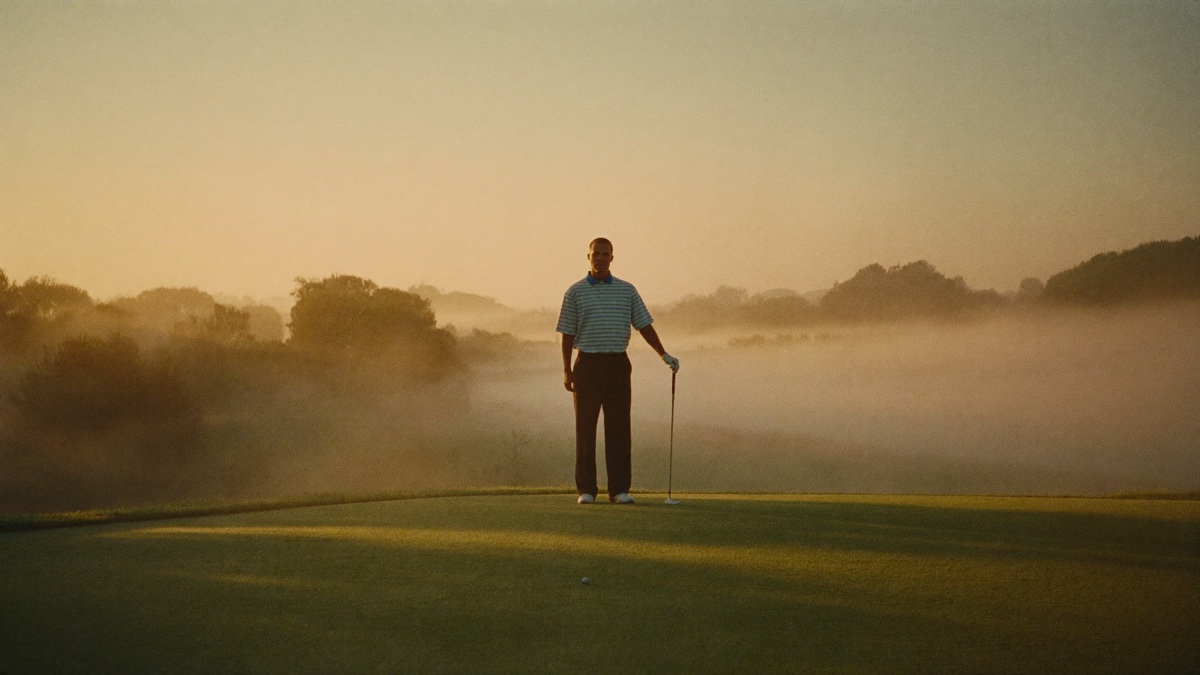
Here's the beautiful, brutal thing about golf: it will make you feel pressure the instant you step onto the first tee. Before you've hit a shot. Before the round even means anything. Your heart picks up, your hands get a little light, and a voice in the back of your head starts asking whether today is the day it all falls apart. Nobody is watching who cares half as much as you do, and it doesn't matter. The game reaches right into your chest and squeezes.
Most golfers spend their whole lives trying to make that feeling stop. They breathe, they swing easy, they tell themselves it's just a game. And they wonder why it never fully goes away. I want to tell you something that took me a long time to learn, chasing this game as far as I could take it: the pressure is not the problem. The pressure is the point.
Pressure means it matters
You only feel pressure over things you care about. Nobody gets nervous hitting balls into an empty field. The nerves show up the moment the shot means something, which is to say the nerves are proof that you're doing something worth doing. If the first tee makes your heart race, it's because you love this. That racing heart is not a warning light. It's a gift.
So stop trying to kill it. Feel it. Live in it. Let it be fire instead of fear. The exact same physical sensation, the quickened pulse and the sharpened focus, is what your body does when it's about to perform. Elite performers in every arena will tell you the same thing: they never stopped feeling nervous, they just stopped reading the nerves as a threat. They learned to stand in the heat and let it fuel them instead of freeze them.
You can't do that from a place of avoidance. You do it by walking straight at the moment and saying, quietly, good. Here we go.
The way you set pressure aside is knowing there's a next shot
Fire is powerful, but you have to point it somewhere. Here's the mental move that turns pressure from something that owns you into something you carry lightly: there is always a next shot, and you can handle the next shot.
Pressure gets heavy when your mind runs to the whole round, the scorecard, the outcome, what it'll mean if you blow it. That's a weight no one can swing under. But golf isn't played in outcomes. It's played one shot at a time, and a single shot is a small, handle-able thing. When you shrink your whole world down to the next shot in front of you, the pressure has nowhere to pile up. You're not carrying the round anymore. You're just doing the next thing, which you know how to do.
And where does that knowing come from? It's not a trick and it's not a pep talk. It comes from your preparation, your process, and your skill. The reason you can stand over a shot with pressure building and still commit is that some part of you can honestly say: I've done the work, I have a way I go about this, and I've hit this shot before. That's the foundation confidence actually stands on. This is the same reason I keep telling players to decide once and act instead of standing there steering the club — the calm over the ball is earned before you ever get there, a lot of it the night before you even leave the house.
Confidence is built through pressure, not around it
Here's what almost nobody tells you: you don't build confidence and then go handle pressure. It's the other way around. Confidence comes through pressure. It's forged in the exact moments you'd rather avoid.
Every time you feel that squeeze on the first tee and step up anyway, you make a small deposit. Every time you're standing over a shot that matters and you ask yourself what do you got? — and then you commit and hit the next one — you prove something to yourself that no range session can. The pressure is the forge. Avoid it your whole life and you stay soft. Walk into it, again and again, and you get tempered. That's why the best rounds of your life will always come on the far side of a moment you almost ran from.
So the next time it builds, don't brace against it. Ask the question out loud in your head — what do you got? — and then go hit the next one. That's the whole thing. Feel it, ask it, act.
This is why we built Elite Golf Consulting on two pillars
Everything I've just described lives inside two of the pillars we teach at Elite Golf Consulting. I'll name these two, because they're the ones that carry you through pressure.
The first is Confidence. Not the loud, hollow kind you fake on the first tee, but the quiet kind that's built on your preparation, your process, and your skill, and then hardened every time you step into pressure and handle the next shot. It's the belief that whatever the game throws at you, there's a next shot and you can handle it.
The second is Goals & Timeline. Because confidence with no direction is just noise. You have to know your mission: what you're actually chasing, and by when. A clear goal is what tells you whether the fire has somewhere to go. It's also how you find out what you're truly made of, which you can only discover by putting a real target in front of yourself and walking toward it. I wrote more about that in how clear intentions break a plateau — a mission turns pressure from a threat into a test you actually want to take.
That's what we do at Elite Golf Consulting. We put golfers in a room together to improve, to be honest about their game, and to see what they've got. Iron sharpens iron. Pressure shared with people chasing the same thing stops being something to survive and becomes something that lifts you.
Confidence and a clear mission are two of the pillars. There are more, and each one is another piece of what actually holds up a great round under pressure. But I'm not going to lay them all out here.
Because the point isn't to read about it. The point is to feel the first-tee squeeze, ask what do you got, and go hit the next one — with a game you finally understand behind you.
Keep Reading