Get Better
How Many Balls Should You Hit at the Driving Range?
It’s the wrong question. A hundred balls isn’t a number to argue about — it’s a budget, and your scorecard already tells you how to spend it.
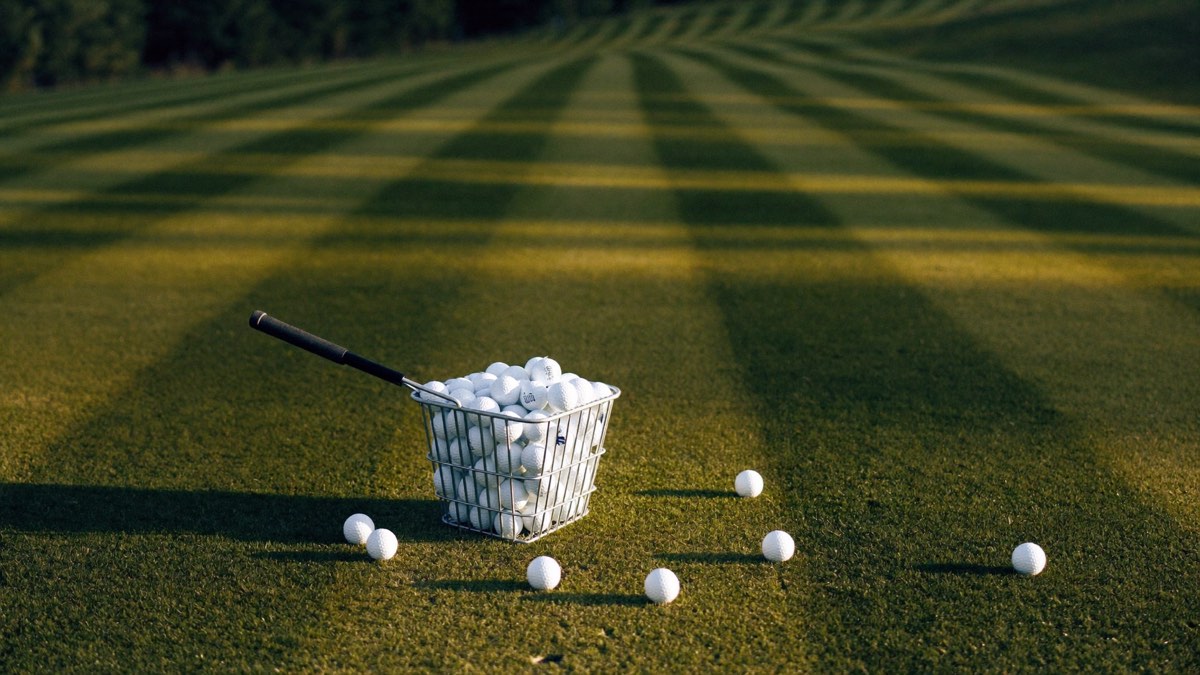
How many balls should you hit at the driving range? Around a hundred is a sensible session — but the count is the least important decision you make at the range. The split is what matters. Break 90 and your round is 89 strokes: 38 putts, 33 shots from the grass, 14 drives and 4 tee shots on the par 3s.
Spend a hundred balls in that same shape and you get 43 putts, 37 from the grass, 16 drivers and 4 tee irons. Most golfers buy a hundred balls and hit forty drivers and no putts at all. Same hour, same money, and almost all of it went to the smallest part of the round.
So the honest answer isn’t a number. It’s a budget. You already know how much practice you can afford this week; your scorecard is the only thing that can tell you how to spend it.
Your round is the only budget that matters
Take the round you’re actually chasing. Breaking 90 means shooting 89 on a par-72 course. At Elite Golf Consulting we budget that round as 38 putts and 51 everything else — that’s our putting par for breaking 90, and I broke the whole ladder down in how many putts per round you should be taking.
One thing to be straight about before we go further: 38 is a target, not your tracked average. It’s what the round you want looks like, not a measurement of the round you played.
Now split the rest by where the shot is played from. A par-72 course has four par 3s, ten par 4s and four par 5s. That means a driver comes out of the bag on fourteen holes and an iron on four of them, which is eighteen tee shots in total.
Take those eighteen off the 51 and you’re left with 33: every approach, every recovery, every chip and every bunker shot in the round.
- 38 putts — 43% of the round
- 33 shots from the grass — 37%
- 14 drives — 16%
- 4 tee shots on the par 3s — 4%
More than four shots in ten are putts. Fewer than two in ten are drives. Nothing in that list is controversial — it’s arithmetic off a scorecard you can check at your own course this weekend.
Now look at what your last bucket looked like
I’ll guess, and you can correct me. A hundred balls, and it went something like forty drivers, thirty mid irons, twenty short irons and ten wedges. Zero putts, because there’s no putting on a range mat.
That split is an assumption about you, not data — so count the next one. Tally what you hit, by club, on the back of the receipt. One session tells you whether this article is about you or not.
If it is, here’s what forty drivers actually buys. You hit fourteen drives in a round. Forty is nearly three rounds’ worth of tee shots in a single hour, and two and a half times what one round asks for. Meanwhile the biggest group on your card — the 38 putts, 43% of the score you’re chasing — got no reps at all.
The hundred-ball session that matches your round
Same bucket. Same hour. Same money. Dealt out by the round instead of by habit:
- 43 putts. Start on the practice green, not the mat. It’s free, it’s usually empty, and it owns the biggest share of your score. Three balls from four feet, then three from twenty, then repeat.
- 37 from the grass. Approach, chip, bunker. The middle of your round isn’t the tee box, it’s the 33 shots you play from somewhere between the tee and the green.
- 16 drivers. Not forty, and not aimed at the horizon. Pick the left edge of a fairway before you tee it up and hit to that.
- 4 tee irons. One for each par 3 you’ll face.
That’s it. Four decisions, and not one of them is a swing change. Nothing here costs more than the bucket you already bought — you’re just spending it where your strokes are. If you want the longer version of this argument, it’s the difference between playing, practicing and training that I laid out in how to shoot your lowest round ever.
Quality over quantity is true, and it’s not the whole answer
Every article on this subject lands on “quality over quantity,” and it’s right. Fifty balls hit with a target and a routine beat a hundred and fifty raked and swiped. Fatigue is real, and the last twenty balls of a long session are usually practising a tired swing.
But “hit fewer, hit them better” still doesn’t tell you what to hit. A golfer who hits sixty beautifully struck drivers has had a high-quality session aimed at 16% of their round. The count question and the quality question both skip the only one that moves your score: which shots are you buying reps in?
How many balls before a round? A different job
A warm-up isn’t practice, and it shouldn’t look like one. Twenty to thirty balls is plenty: a few wedges to find your tempo, a few mid irons, a few drivers, then straight to the putting green for speed. You’re waking the body up and setting a rhythm, not fixing anything.
Trying to repair a swing on the range half an hour before you tee off is how a good round gets lost on the first tee. The warm-up has its own value, though, and it’s worth more than most golfers think — I put numbers on it in the two strokes you can save before you tee off.
Before anyone argues
Sixteen drivers is still sixteen. This is a reallocation, not a ban. Driver practice is worth something real: penalty shots off the tee cost more than a shot each, and confidence with the big stick changes how you play a hole before you’ve hit it.
And the 38 putts is a budget, not a measurement — your own number belongs on your own card, which is exactly the kind of thing a golf journal is for.
If you already start every session on the practice green, none of this is for you; you’re doing the hard part already. If your range has no practice green at all, put the whole hundred into the 37 from the grass and the 16 drivers and call it even.
Everyone else: count your next bucket. Then look at your card, look at the split, and see whether the two have anything to do with each other.
Which shots you track and which ones fool you is a whole subject of its own — the 5 golf stats that actually lower your handicap is where I’d start. And if 89 is the round you’re chasing, how to break 90 is the rest of the plan.
Questions golfers ask about range sessions
How many balls should you hit at the driving range?
Around a hundred is a sensible session, but the count matters far less than the split. Break 90 and your round is 89 strokes: 38 putts, 33 shots from the grass, 14 drives and 4 tee shots on the par 3s. Spend a hundred balls in that shape and you get 43 putts, 37 from the grass, 16 drivers and 4 tee irons. Most golfers hit forty drivers and no putts, which is the same hour spent on the smallest part of the round.
Is it bad to hit a lot of drivers at the range?
It isn’t bad, it’s expensive. You hit a driver on about fourteen holes of an eighteen-hole round. Forty drivers in one bucket is nearly three rounds’ worth of tee shots in a single hour, and two and a half times what one round asks for. Sixteen drivers to a target you picked before you teed it will do more for your score than forty swung at the horizon.
How many balls should you hit before a round of golf?
Far fewer, and for a different reason. A pre-round warm-up isn’t practice. Twenty to thirty balls is plenty: a few wedges, a few mid irons, a few drivers, then putts to feel the speed of the greens. You’re warming the body and setting the tempo, not fixing anything.
Keep Reading