Mindset
What to Do When You Feel Stuck in Golf
The worst feeling in this game isn't a bad score. It's standing there not knowing what to work on. Here's the reset I come back to every single time — and it works the same way off the golf course.
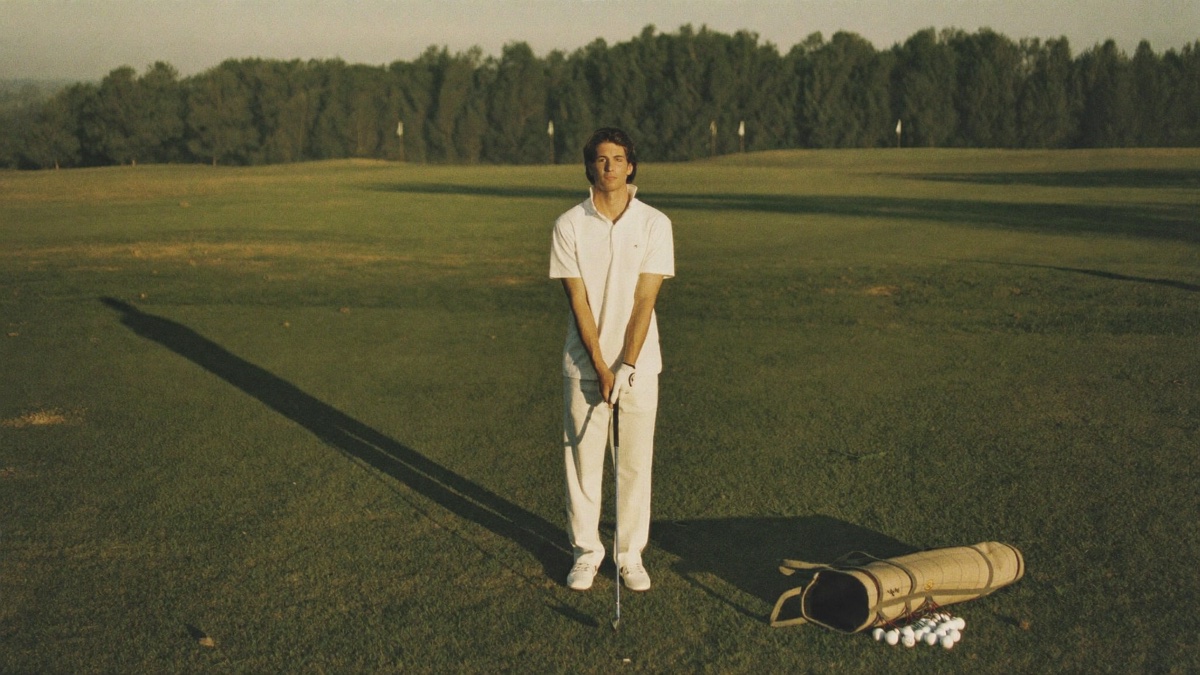
The worst thing in golf is feeling stuck.
Not shooting a bad number — bad numbers are fine, everybody signs for those. I mean the feeling of standing on the range or the first tee and genuinely not knowing what to do next. You've got five ideas and no idea which one is true. You're not improving, you're not sure why, and every fix you try makes it a little worse. That feeling is heavy, and it follows you to the car.
And the same thing happens in life. Same exact feeling. The work isn't moving, the relationship isn't moving, you're busy all day and nothing is landing, and you can't point at the thing that's wrong. Stuck is stuck.
What has helped me — every time, in both places — is coming back to the basics. Not the beginner stuff. The basics. Three questions:
- What am I good at?
- What can I control?
- Where is my target?
You will always be able to answer the second one, even on your worst day, because the answer never changes. Your breath and your attention. That's it. That's the whole list. Everything else in this game — the lie, the wind, the tee time, the guy talking on his phone in your backswing, whether the ball turns over — is out of your hands. Your breathing and where you point your mind are yours.
Which brings you to the third question, and it's the one most golfers never actually ask out loud. Where is my target? Not "where do I not want it to go." Not "what's the swing thought." Where, exactly, am I trying to send this golf ball. Nine times out of ten, when somebody tells me they feel lost out there, they can't answer that — and you can't hit a shot you haven't aimed.
Most golfers are managing everything except the two things that matter
Watch a golfer who's struggling and you'll see where the attention has gone. It's on everything around them. Their swing. Ball position. Grip. Where the club is at the top. What their playing partner shot on the last hole. What the guy on YouTube said about shallowing.
None of that is wrong, exactly. When things are going well, that stuff is fine — it's maintenance, it's craft, it's fun to work on. But when the round is going sideways, that same attention turns into a swarm. You are standing over a golf ball running a checklist of eight items, and none of them are the shot.
When it's going sideways, there is one place to put your focus: the target. And then one question underneath it: where is my center?
That's the whole reset. Target, and center. Two things instead of eight.

Know where your center is
Center means two different things and you need both.
Your physical center. Where your balance lives. Stand there in your stance, feet under you, and actually feel it — middle of the feet, weight quiet, not out on your toes reaching, not hanging back on your heels. You should be able to stand over a shot and know, without thinking about it, that you're on balance. If you can finish a swing and hold the finish, you were centered. If you can't, you weren't. That's the most honest swing feedback there is, and it costs nothing.
Your center in the game. This is the "what am I good at" part. Every golfer has one — the thing that holds up when the rest is falling apart. Maybe you're a good wedge player. Maybe you can always find the fairway with a 4-iron. Maybe you're a stubbornly good putter. That is your center. That is what you play from when you're lost.
When you know both — where your balance is, and what part of your game is actually yours — then you have something solid to stand on. And once you're standing on something solid, you can put your attention where it belongs: out there, on the target. Not on the ball. Not on the club. On the spot you want the ball to finish. Seeing the shot before you hit it is not a bonus skill for good players — it's the thing that keeps you from drowning in mechanics.
You already know this feeling. It happens on the range.
Here's how I know you've felt it. You go to the range, you hit two bad shots, and what happens?
You rake another ball over. Faster. Then another one, faster still. Twenty minutes later you're hitting a ball every eight seconds, searching for something, anything, that feels okay. Your breathing has gone shallow. You haven't picked a target in ten minutes. You're not practicing anymore — you're panicking with a 7-iron in your hands.
And the whole time, the real problem is that you were never working on the right thing to begin with. Speeding up doesn't fix that. It just gets you to the wrong answer more times per hour.
So you reset. Right there, in the middle of the bucket. Put the club down. Take a full breath — a real one, all the way out. Step back off the ball. Then start again, slowly: pick one target, get centered over it, hit one ball, and watch where it actually goes. Then do it again. Ten balls like that will teach you more than the sixty you just beat.
That's the whole move. When you feel yourself speeding up, that's the signal to slow down. It's true on the range, it's true on the 14th tee when the round is slipping, and it's true at your desk on a Tuesday.
I've been stuck — a lot
I want to be honest about this because I think people assume a college player at San Diego State and a U.S. Mid-Amateur round of 32 means somebody who always knew what he was doing. I didn't. I've been stuck in golf for entire seasons. I've been stuck in life for longer than that — living in a van, chasing something I couldn't quite name, wondering if I'd wasted the whole thing.
What got me out was never a breakthrough. It was always the same three boring moves: I focused on what I could control. I played from what I was good at. And I got clear about where I was aiming.
That's it. That's what I've got, and it has never once failed me — not because it's clever, but because it's the only part of the situation that was ever actually mine.
Change takes time. The reset takes today.
Here's the part I don't want to sell you short on: change takes time. Real change — a swing that holds up, a handicap that drops and stays down, a life that looks different — that takes months. Sometimes years. Anybody telling you otherwise is selling something.
But a better process and a reset are available to you today. Right now, this afternoon, on the next ball. You don't have to wait for anything or anyone. You just have to stop, breathe, find your center, pick a target, and start again.
And this is exactly why Goal & Timeline is one of the nine pillars I built the whole system around. Stuck almost always means one of two things: you never named the mission, or you never gave it a timeline. A goal with no date is a daydream — it can't tell you what to do on a Tuesday. A date with no goal is just pressure. Put them together and suddenly there's a right thing to work on this week, which is the exact thing being stuck robs you of. (If your score is the thing that's frozen, I wrote about that specifically here: how clear intentions break a plateau. And if the problem is that your head is too loud, here's why action beats analysis on the golf course.)
You can read all nine of them here: the 9 pillars of golf. Pillar 6 is the one that gets people unstuck.
So the next time you're standing over it with no idea what to do — don't go looking for a new swing thought. Go back to the basics.
Breathe. Find your center. Pick your target. Hit the shot.
That's always been the way out.

Keep Reading